Friday’s Forgotten Book: Murder in Melbourne by Dulcie Gray

Dulcie Winifred Catherine Bailey Denison, known as Dulcie Gray, (1915 – 2011) was a Renaissance woman: She was a British singer and actress on stage, film, and television; she wrote 18 mysteries between 1957 and 1979; and she studied butterflies. She was vice-president of the British Butterfly Conservation Society and in 1978 she published Butterflies on My Mind, a work on the conservation and life of butterflies in Great Britain. She also wrote a short biography of J.B. Priestly, the English novelist and playwright.

Her second mystery was a stand-alone called Murder in Melbourne (Arthur Barker, 1958), which was adapted both for BBC radio and television broadcast. The book jacket blurb says she wrote the first part while she was performing in a play in Melbourne.

Richard Quayle is flying into Melbourne to ask his long-term girlfriend Anna Matheson to marry him. They had parted on less than amicable terms four months earlier, as Anna wanted to be married and Richard was happy with their relationship as it was. He is a little unsure of his reception, apprehensive that Anna had decided she could live without him during their hiatus.

Anna doesn’t answer the telephone and Richard goes to her hotel room to find the door unlocked and Anna on the bed, dead for some hours. The police find that she’d been spending a lot of time with Jack Leonard who’d left Melbourne earlier that day and that she’d attended a party given by Felix Milton the day before. Milton was known for his frequent and elaborate parties. It was there that the police believe the fatal dose of poison was given to Anna in a drink.

Richard is dissatisfied with the slow progress of the official investigation and decides to conduct one of his own. Oddly enough, the police don’t seem to object to Richard’s efforts and in fact welcome the additional information he can offer. He attends one of Milton’s parties, where he meets most of Anna’s social circle. Everyone has a secret or two, and they aren’t especially happy that Richard suspects them. One of the group is being blackmailed and is distraught at the idea that her well-hidden past might not be as shrouded as she had supposed.

All of the plot threads are sorted out during another of Milton’s parties in a classic denouement, where the police inspector masquerades as one of the guests. Overall, an interesting read but something was off about the structure or the pacing, I haven’t decided exactly what it was. The epilogue seemed to be pointless and I’m not sure what purpose it was supposed to serve. Fans of fair-play mysteries will find this story problematic because clues were sadly lacking. The portrayal of Melbourne as young but growing city was intriguing. Nonetheless, I enjoyed the book and will read another by the author if the opportunity arises, although her works are not especially common.

Friday’s Forgotten Book: The Clock Strikes Twelve by Patricia Wentworth

Mysteries set on New Year’s Eve or New Year’s Day are not as common as those set around Christmas, which seems to be a particularly lethal time of year. However, The Clock Strikes Twelve by Patricia Wentworth (Hodder & Stoughton, 1945) fits the current need admirably, especially because the setting is in a country house, a time-honored place for murder.

Patricia Wentworth was the pen name of Dora Amy Elles (1877-1961). She is most known for her traditional mysteries featuring Miss Silver, a former governess, now private investigator. Just how Miss Silver managed this transition is not spelled out in the books but it’s something I would like to know more about. However, by the time the series opens, she has established her practice and has something of a reputation among the police and the upper echelons of English society.

In the seventh outing of her career Miss Silver is called in to help the Paradine family. It’s the end of 1941 and England is focused on the war with Germany. The head of the family James Paradine announced at the family gathering on New Year’s Eve that someone had betrayed him and he would be waiting in his study until midnight for that person to confess. Early the next morning his body is found on the grounds below the balcony outside his study. The evidence suggests that he was pushed.

The family members each have a favorite suspect–the relative they like the least–and few have a solid alibi, despite the murder clearly being committed in the middle of the night. Despite the cold more than one of them was wandering around outside. Fortunately one of them encounters Miss Silver in the nearest town, where Miss Silver is buying wool to knit another garment for her niece’s children. Miss Silver is a prolific knitter of children’s apparel; in each book she completes at least one sweater or pair of socks. Miss Silver agrees to assist the family in sorting through the evidence and wonky alibis.

By this title Wentworth had settled into a groove for these books: a victim more vulnerable than he or she supposes, a romance gone awry because of or at least affected by the murder, well developed characters with plenty to hide. The books written in the 1940s had the additional backdrop of World War II and England’s deep national commitment to the war effort.

Favorite Books of 2020

As of today I read 162 books during 2020, the large number partly because of the enforced seclusion brought on by the pandemic. A few were re-reads but most crossed my path for the first time. Following are the titles of the books I initially read during 2020 and liked the most. Each of them was the subject of a review written by me and published either on Kevin’s Corner, a blog published by Kevin Tipple, or on my own blog. Links to the reviews are provided for more in-depth consideration.

Death at the Medical Board by Josephine Bell (Longmans, Green & Co, 1944)

An elaborately constructed plot set in wartime England.

https://happinessisawarmbook.home.blog/2020/08/28/fridays-forgotten-book-death-at-the-medical-board-by-josephine-bell/

Dead Woman Walking by Sharon Bolton (Minotaur, 2017)

A wonderful spin on the unexpected witness to a murder trope.

https://kevintipplescorner.blogspot.com/2020/08/aubrey-hamilton-reviews-dead-woman.html

To Wake the Dead by John Dickson Carr (Hamish Hamilton, 1938)

Carr is considered the king of the locked room mystery and this book shows why.

https://happinessisawarmbook.home.blog/2020/11/13/to-wake-the-dead-by-john-dickson-carr/

The Boy from the Woods by Harlan Coben (Grand Central Publishing, 2020)

Lots of subplots and surprises in this book; the final one is completely out of left field.

https://kevintipplescorner.blogspot.com/2020/11/aubrey-hamilton-reviews-boy-from-woods.html

The Shadow Broker by Trace Conger (CreateSpace Independent Publishing, 2014)

Good thriller, excellent demonstration in how to trace someone who doesn’t want to be found.

https://kevintipplescorner.blogspot.com/2020/04/aubrey-hamilton-reviews-shadow-broker.html

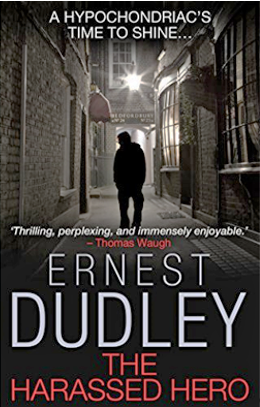
The Harassed Hero by Ernest Dudley (Hodder & Stoughton, 1951)

Entertaining story about a hypochondriac who encounters a counterfeiter.

https://happinessisawarmbook.home.blog/2020/10/29/fridays-forgotten-book-the-harassed-hero-by-ernest-dudley/

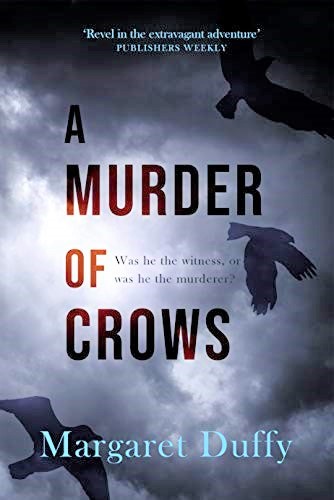
A Murder of Crows by Margaret Duffy (St. Martins Press, 1988; Lume Books, 2015)

Espionage, romance, and mystery, this first book of a long-running series is hard to categorize.

https://kevintipplescorner.blogspot.com/2020/06/aubrey-hamilton-reviews-murder-of-crows.html

Lesser Evils by Joe Flanagan (Europa Editions, 2016)

Dark and often depressing, this story has intriguing characters and possibly the most unexpected resolution to a subplot I’ve ever seen.

https://kevintipplescorner.blogspot.com/2020/02/aubrey-hamilton-reviews-lesser-evils-by.html

Death of an American Beauty by Mariah Fredericks (Minotaur, 2020)

Wonderful historical mystery, Fredericks has captured the feel of early 1900s New York perfectly.

https://kevintipplescorner.blogspot.com/2020/12/aubrey-hamilton-reviews-death-of.html

Summertime, All the Cats Are Bored by Philippe Georget (Europa Editions, 2013)

A highly competent police procedural and the best title of the year.

https://kevintipplescorner.blogspot.com/2020/07/aubrey-hamilton-reviews-summertime-all.html

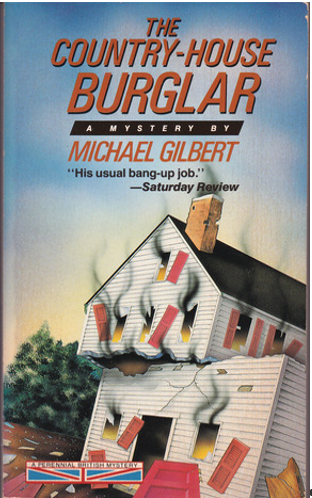
The Country House Burglar by Michael Gilbert (Harper, 1955)

A fine traditional English village mystery.

https://happinessisawarmbook.home.blog/2020/08/13/fridays-forgotten-book-the-country-house-burglar-by-michael-gilbert/

The Reckless Oath We Made by Bryn Greenwood (Putnam, 2019)

Part romance, part thriller, I love the characters.

https://kevintipplescorner.blogspot.com/2020/11/aubrey-hamilton-reviews-reckless-oath.html

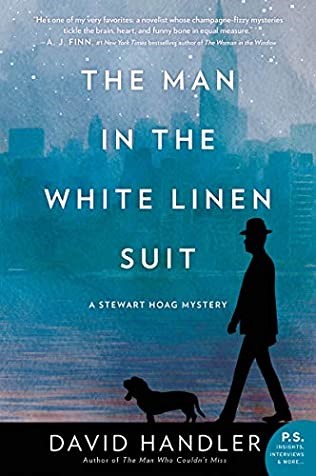
The Man in the White Linen Suit by David Handler (Morrow, 2019)

The latest from Hoagy and Lulu, a celebrity ghostwriter and his basset hound sidekick.

https://kevintipplescorner.blogspot.com/2020/10/aubrey-hamilton-reviews-man-in-white.html

Dead Man’s Mistress by David Housewright (Minotaur, 2019)

Last year’s title from one of my all-time favorite crime fiction writers.

https://kevintipplescorner.blogspot.com/2020/05/aubrey-hamilton-reviews-dead-mans.html

The Elephant of Surprise by Joe Lansdale (Mulholland, 2019)

Hap and Leonard’s latest adventure as private investigators in east Texas.

https://kevintipplescorner.blogspot.com/2020/03/aubrey-hamilton-reviews-elephant-of.html

The Blues Don’t Care by Paul Marks (Down & Out Books, 2020)

A wonderful historical set in Los Angeles during the era of big bands.

https://kevintipplescorner.blogspot.com/2020/07/aubrey-hamilton-reviews-blues-dont-care.html

The Last House Guest by Megan Miranda (Simon & Schuster, 2019)

A mystery that builds suspense gradually with a zinger in the last two pages.

https://kevintipplescorner.blogspot.com/2020/04/aubrey-hamilton-reviews-last-house.html

The Right Sort of Man by Allison Montclair (Minotaur, 2019)

First title in what looks to be an excellent historical series set in post-war London.

https://kevintipplescorner.blogspot.com/2020/09/aubrey-hamilton-reviews-right-sort-of.html

Crush by Phoef Sutton (Prospect Park Books, 2015)

A hard-charging thriller about the son of a Russian Mafia boss who shuns his father’s career choices.

https://kevintipplescorner.blogspot.com/2020/01/aubrey-hamilton-reviews-crush-by-phoef.html

The Ringmaster by Vanda Symon (Penguin, 2008; Orenda, 2019)

Second book in an award-nominated police procedural series set in New Zealand.

https://kevintipplescorner.blogspot.com/2020/12/aubrey-hamilton-reviews-ringmaster-by.html

Friday’s Forgotten Book: Redemption by Jill McGown

Jill McGown (1947-2007) is most remembered for her tightly plotted and nuanced books about Chief Inspector Lloyd, whose first name is a running gag throughout the series, and Detective Sergeant Judy Hill, co-workers and lovers in East Anglia. In addition to the complexities of their relationship, McGown invariably delivers a layered mystery full of misdirection, credible characters, and realistic motives. Redemption is the second in the series of 13 books about the pair. It was published by Macmillan in London in 1988. St. Martin’s Press published it in the United States under the name Murder at the Old Vicarage in 1989.

Christmas Eve starts normally enough in the village where George Wheeler is vicar. Snow is falling, complicating residents’ efforts to run errands for Christmas and Boxing Day. His wife Marian is preparing for the series of services that will begin that afternoon while he is supposed to be finishing his sermons. Their daughter Joanna, home after a stay in hospital, is part of the shopping crowd. By the end of the day, when everyone’s thoughts should be turned toward Christmas carols and gifts, Joanna’s estranged husband lies in one of the upstairs bedrooms in the vicarage, bludgeoned to death by a poker, and the entire family is under suspicion.

Judy Hill is relieved to be called away from home to the murder site. She has nothing in common with her husband’s visiting parents, and her mother-in-law is hinting a little too broadly about grandchildren. Lloyd is wanting more of her time than she feels she can give without jeopardizing her marriage, and their relationship seems to be at a crossroads.

She and Lloyd view the Wheelers’ insistence on a wandering tramp with skepticism. Once they learn that Joanna was in hospital because of a beating administered by the victim, they are sure they have the answers in front of them. It’s just a question of which Wheeler got tired of the husband/son-in-law first. Unfortunately, all three of them have alibis.

The story flips back and forth between the domestic crisis in the Wheeler household and the crisis in the Lloyd/Hill relationship. Both get sorted, more or less, by the end. An homage to Agatha Christie and the first appearance of Miss Marple, this story is one of the best in a very good series.

Friday’s Forgotten Book: The Twelve Deaths of Christmas by Marian Babson

Marian Babson was the pseudonym of American mystery writer Ruth Marian Stenstreem (1929-2017). She lived most her life in London, England, where she held a variety of jobs including librarian and editor of a knitting magazine. She received the Crime Writers’ Association “Dagger in the Library” award in 1996. The Dagger in the Library is a prize for a body of work by an established crime writer that has long been popular with borrowers from libraries. She received the Malice Domestic Award for Lifetime Achievement in 2004. She published some 45 mysteries, some with series detectives but most stand alone.

The Twelve Deaths of Christmas (Walker, 1980) was her eleventh non-series book. So it seems there’s a serial killer on the loose in London, and right at Christmas too. There is no apparent pattern to the killings. The police are doing their best but without a trend or some kind of identification, they haven’t much to work with. Alongside their investigative attempts the reader has a view into the serial killer’s mind, which in another author’s hands would be quite grim. The third point of view focuses on an ordinary boarding house full of people going about their ordinary lives. As the story progresses, it becomes clear the killer has an association with the boarding house but not exactly in what way.

A sort of cozy mystery, something of a psychological thriller, and a kind of police procedural, this story is an amalgam of all three. The identity of the killer came as a complete surprise to me, although in retrospect there were a few clues that should have caught my attention. A fast absorbing read, just right to pick up between baking cookies and trips to the post office during the run-up to the holidays.

Friday’s Forgotten Book: Death for Dear Clara by Q. Patrick

Q. Patrick was the pseudonym of Hugh Callingham Wheeler (1912-1987) and Richard Wilson Webb (1901-1966), who also published under the names Patrick Quentin and Jonathan Stagge. Webb wrote with Martha Mott Kelly under the name Q. Patrick for a few years before Webb teamed up with Wheeler. Webb also worked with Mary Louise White Aswell on a couple of early novels. Wheeler and Webb are the authors of Death for Dear Clara (Simon and Schuster, 1937), which is the first appearance of Timothy Trant, a police lieutenant in New York City.

Clara Van Heuten was much admired for her initiative in setting herself up in business after she was widowed. She ran what she called a literary advice bureau, not an agent as such, but an editorial service that read manuscripts of all kinds and recommended improvements. From the lush furnishings in her office and her Park Avenue apartment, apparently it was quite successful.

On the afternoon that she died, a number of clients visited her in rapid succession. When her secretary entered her office with letters to be signed at the end of the day, she found Clara slumped across her desk with a knife in her back. After the police were called in, Detective Timothy Trant was assigned to the case, considering the victim’s place in society. A Princeton graduate, he was believed to have an understanding of the upper social circles that escaped lesser police officers and was deployed as a sort of supplemental secret weapon. His choice of clothing was unorthodox for a policeman. When he first comes in to the action, he is wearing a gray suit with a maroon shirt and a black tie. He tells someone he wears all colors except violet and pastels. (I don’t know what he has against pastels.)

Despite his sartorial peculiarities Trant is quite workmanlike in his investigation and the story that follows is classic Golden Age in style, down to the big reveal at the end in front of all of the suspects. A compelling case could be made against several of them, as Clara was not as nice as everyone thought she was.

The writing is gently sardonic throughout; one character’s wild youth is described as being “the New York débutante to end all débutantes. Her wild escapades had run neck and neck on the front pages with the downward careening of stock prices….But flaming youth had palled. … Patricia had abandoned her capitalistic pranks to become the democrat to end all democrats. She had deflected her money and her boundless energy into soup for soup kitchens and butter for breadlines. She had become at once the champion and the terror of Manhattan’s unemployed.”

Solid plot, smoothly paced story, proficient writing. A good read!

Friday’s Forgotten Book: The Canary Murder Case by S. S. van Dine

S. S. Van Dine is the pseudonym used by Willard Huntington Wright (1888 – 1939) when he wrote detective fiction. Originally a literary and art critic, Wright read dozens of mysteries and crime novels during a lengthy illness, after which he wrote an essay on the history and conventions of detective novels that was published in 1926. He also wrote an article, Twenty Rules for Writing Detective Stories, in 1928 that has been often reprinted and compared to Ronald Knox’s commandments. After his research into the origins of the detective story, he wrote a dozen contemporary mysteries featuring amateur detective Philo Vance, a well-to-do member of New York’s upper crust. He later developed the scenarios for a number of detective short films produced in Hollywood.

The Canary Murder Case (Macmillan, 1927) was the second adventure for Vance. In the introduction Van Dine describes himself as the personal attorney and close friend of Vance, who accompanied him on his investigations and became his eventual scribe. Vance was well-acquainted with the New York District Attorney John Markham who invited him to assist in the investigation of the murder of Margaret Odell, a Broadway singer and dancer known as the Canary after one of her most famous roles. Odell, notorious for her flamboyance and her love affairs, was found strangled in her apartment one morning by her maid. The apartment was ransacked and her jewelry was missing. Based on the evidence of the switchboard operators and the janitor, the building was secured such that no one could have entered her apartment near the time of the murder, thereby setting up a nice locked room puzzle.

Philo Vance is the classic gentleman detective, wealthy and well-educated with a strong interest in the arts. His foppish mannerisms conceal significant intelligence and creative problem-solving skills. Think Peter Wimsey or Albert Campion transported to Jazz Age New York City. The district attorney and police detectives who can’t keep up with Vance’s out-of-the-box approach to the investigation serve as his foils. The mystery offers an apartment that no one could have entered to commit the crime and suspects with apparently unassailable alibis. In addition, the setting, the social context surrounding the murder, and the dialog are very much of the time and place, making this an intriguing period piece of crime fiction.

Friday’s Forgotten Book: The Jacob Street Mystery by R. Austin Freeman

Richard Austin Freeman (1862-1943) was an English doctor who created the fictional forensic scientist Dr John Thorndyke. Freeman was born in London and received a medical degree from Middlesex Hospital Medical College. He moved to the Gold Coast of Africa to work but returned to England after seven years. He began writing fiction in 1902. His work has been exhaustively analyzed. See for instance the Classic Mystery Blog: https://classicmystery.blog/ and the Golden Age Detection website: http://gadetection.pbworks.com/w/page/7930620/Freeman%2C%20R%20Austin. See also Mike Grost’s essay: http://mikegrost.com/freeman.htm.

His last full-length Thorndyke novel was The Jacob Street Mystery (Hodder & Stoughton, 1942), published in the U.S. as The Unconscious Witness (Dodd, Mead, 1942). Interestingly enough, Thorndyke does not make an appearance in this book until about two-thirds through. In its leisurely beginning landscape artist Tom Pedley is introduced. Living quietly in a small studio Pedley keeps largely to himself and focuses on his work. Almost immediately Thorndyke’s laboratory assistant Mr. Polton appears and through him Pedley gives a bit of information he didn’t realize he had about an unsolved murder.

Awhile later a Mrs. Schiller moves nearby and makes a determined assault on Pedley’s time and attention, then transfers her attention to one of Pedley’s customers, an African lawyer who is sitting for his portrait. They spend a good deal of time together. Mrs. Schiller goes to visit friends unexpectedly and is not heard of again. A few weeks later the body of an unknown woman is found in her deserted rooms. And here, after about a third of the book, is where the usual activities associated with a mystery begin.

Ordinarily I would have been muttering under my breath about the slowness of the pace, if I was even still reading, but the long lead-in is pleasant. The details about oil painting and Pedley’s solitary life are so authentic I suspect they come from first-hand experience. I had never heard of a haybox, from which Pedley extracts his meals, so that was cause for a bit of research.

Freeman’s representation of a man of color is intriguing, as the African is given a position of responsibility and is treated with great respect. The friendship and possible romance between the married Caucasian woman and African man is unusual for the time. Pedley is concerned about the outcome but no other character mentions it.

Despite its general readability, this last Thorndyke has some peculiarities that grated. For instance, some form of the word “crinkle” is used in association with Mr. Polton eight times. Yes, I counted. He crinkles shyly or knowingly or slyly or deferentially or cautiously. The investigation at times stretched credulity. A path covered with leaves that still shows footsteps clearly weeks afterward is hard to envision, yet much is made of it. Nonetheless, I rate this story highly, mostly because of the characters and creative plot. Readers who enjoy courtroom fireworks or criminal forensics will especially want to look it up.

Friday’s Forgotten Book: Mrs. McGinty’s Dead by Agatha Christie

Mrs. McGinty’s Dead (Collins, 1952) is one of my favorite mysteries from Agatha Christie (1890-1976). Not forgotten exactly, more like overlooked in the prodigious output from this peerless author, it is the 28th volume in which Hercule Poirot, the retired Belgian policeman turned private investigator, appears. By this time Christie had grown quite tired of Poirot, about whom she’d been writing for 30 years, and she let her annoyance show clearly in the story, one of the reasons I love it so much.

Soon-to-retire Superintendent Spence, whose path had crossed Poirot’s in their long careers, approaches him with a request to investigate a crime that everyone thinks has been solved. Spence led the police work that resulted in a conviction for the murder of a charwoman in a village outside London. Despite the evidence Spence believes the accused did not commit the murder and does not want to retire with a wrongful execution on his conscience. Working against the clock Poirot takes up residence in the village and interviews everyone who knew Mrs. McGinty. He learns that just before she was killed Mrs. McGinty was excited about one of the more dramatic Sunday papers which featured women in famous murder cases. She was convinced one of the women described in the article was living in the village.

This discovery opened a completely new line of inquiry, and Spence and Poirot were busy for awhile tracking down the women in question. The war of course had destroyed records everywhere, something Christie used to good effect in her plots many times and used here. Again here, as Christie pointed out in A Murder Is Announced (1950), is the mention that anyone could show up in a village after the war and claim to be a war widow. It could be proven otherwise only through a good deal of official effort and maybe not even then. As usual, red herrings and misdirection are cleverly deployed to result in Poirot’s standard drawing room denouement.

One of the best parts of this book is the cast of characters, which are ingeniously conceived. The keeper of the village post office and general store who functions as gossip central is right on target. Maureen Summerhayes, the delightful but inept hostess of the house where Poirot is staying, crops up again peripherally in Cat Among the Pigeons (1959). The descriptions of household chaos, seen through the eyes of the precise and finicky Poirot, are hilarious.

Of course the star of the supporting cast is Ariadne Oliver, Christie’s apple-eating alter ego, who is in the village to collaborate with a local playwright on the dramatization of one of her books about Sven Hjerson, Oliver’s Finnish detective. These are fabulous scenes. Hjerson is clearly meant to be Poirot and Christie in the persona of Oliver goes on at great length about how much she dislikes her creation. Christie also takes the opportunity to stick a knife into filmmakers who insist on making her characters something completely different for the screen. It is not often an author inserts herself into her own story, much less complains about her own brainchild. Christie clearly felt secure enough to rant at length and she did.

I cannot believe that any fan of Christie’s work has not read this gem. However, it is a fine re-read, as I know from experience. Highly, highly recommended.

Friday’s Forgotten Book: To Wake the Dead by John Dickson Carr

John Dickson Carr (1906-1977) is one of the most well-known Golden Age mystery writers. He also wrote under the names Carter Dickson, Carr Dickson, and Roger Fairbairn. He is celebrated for his beautifully complicated plots, often considered locked room crimes or impossible crimes in which the crime appears to have been committed when no one was near. His two main series characters were Sir Henry Merivale and Dr. Gideon Fell, although he wrote a number of stand-alone novels. See a lengthy analysis of his work on the Golden Age Detection wiki: http://gadetection.pbworks.com/w/page/7930179/Carr%2C%20John%20Dickson

To Wake the Dead (Hamish Hamilton, 1938) is the eighth or ninth Dr. Gideon Fell, depending on the bibliography referenced. It begins with Christopher Kent longing for breakfast outside a London hotel and no money immediately available with which to buy it. Quite against his usual modus operandi, he enters the hotel and boldly orders breakfast and bills it to a room in the hotel. He assumes that by the time the hotel understands he is not the paying occupant of that room, he will be long gone. Instead, he is asked by the hotel manager to go to the room he is believed to occupy and retrieve a bracelet the previous tenant left behind. Upon entering the room, instead of a bracelet he finds the battered body of a woman.

Not wanting to be arrested for a crime he didn’t commit, he slipped out the other door to the opposite corridor and made a beeline for the residence of Dr. Gideon Fell. There he finds Superintendent Hadley of the Criminal Investigation Division, who is consulting Dr. Fell about the woman’s death, just reported to him, which is a duplicate of a murder committed two weeks earlier.

Kent can easily prove he was on a ship at the time of that first murder and nowhere near the hotel at the time of the second. That being the case, Hadley does not hesitate to share the details of the investigation with Kent. The country house party was made up of Kent’s friends and both murder victims were well known to him. Hadley wanted Kent’s impressions of them and his help in identifying possible motives.

Admirers of locked room puzzles will adore this book as it offers two separate murders that apparently were carried out invisibly. Fell and Hadley work through timetables and witnesses and alibis at the London hotel and the country house in Sussex and arrive at a completely unexpected conclusion. This is a fine story with an ingenious solution.